Our Office
-
East: 6595 Roswell Rd Suite G 5961 Atlanta, GA USA 30328
-
West: 3731 W Warner Ave Office 18, Santa Ana, CA USA 92704
Comprehensive Solutions for Surgical Suture Manufacturing
As part of our expanding portfolio, we are proud to offer end-to-end services in the design and development of high end suture manufacturing facilities. Leveraging our extensive expertise in the healthcare sector, we specialize in providing all the essential devices and systems required to produce high-quality surgical sutures, ensuring precision, efficiency, and compliance with global standards.
Our comprehensive solutions cover every aspect of suture production, from facility design to the delivery of advanced machinery. We provide equipment including Clean Rooms for controlled environments, Suture Winding Machines for precision handling, Needle Attaching Units for secure needle attachment, and Braiding Machines for durable suture construction. Additionally, we supply critical support devices such as Glove Boxes, Dry Cabinets, and Packaging Equipment to maintain sterility and ensure the integrity of the final product.
At HEDONE USA, we are committed to partnering with manufacturers to create efficient, reliable, and scalable suture production operations that meet the highest standards of quality and safety. Whether you're looking to establish a new facility or enhance your current capabilities, our solutions are designed to help you achieve your goals in the global healthcare market.
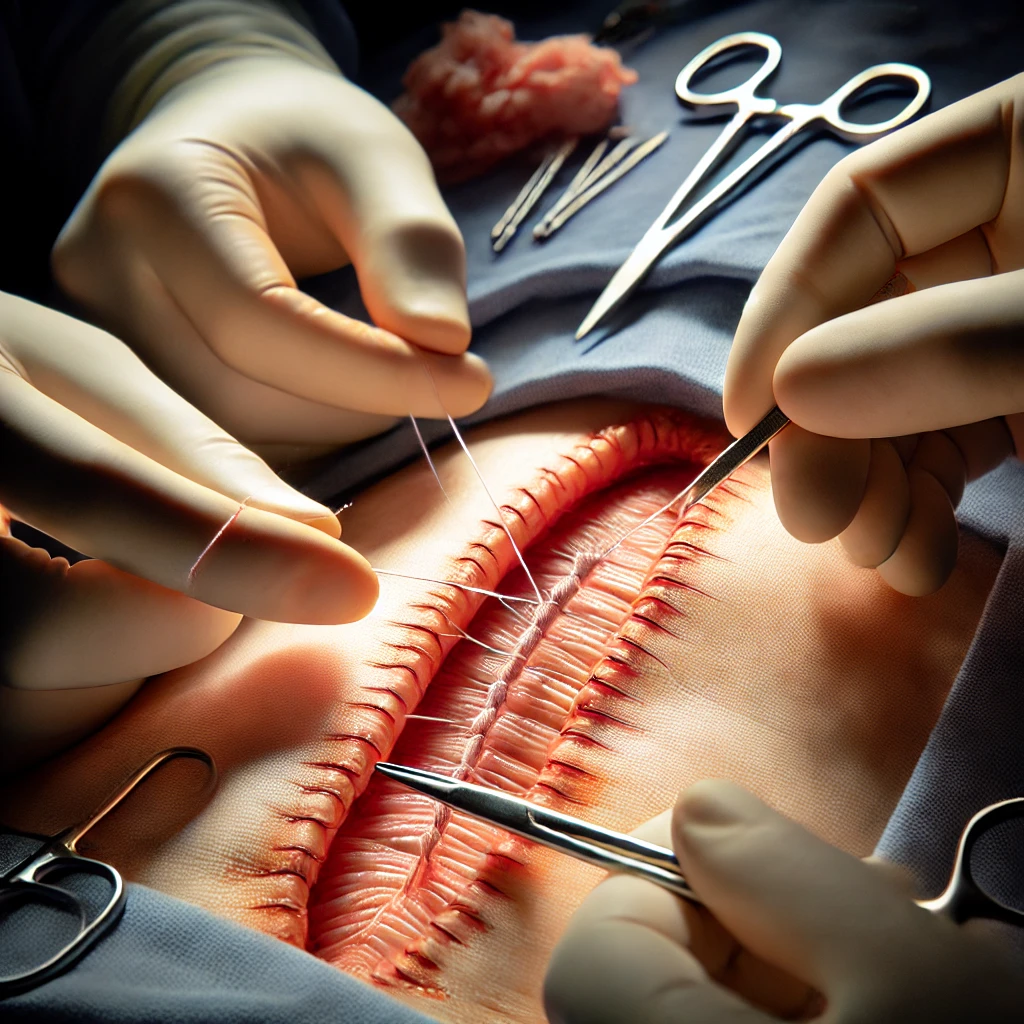
Surgical sutures are medical devices used to close wounds or surgical incisions, available in absorbable and non-absorbable types. Absorbable sutures are designed to break down naturally in the body over time, eliminating the need for removal. Common types include Polyglycolic Acid (PGA), Polylactic Acid (PLA), and Catgut, which are used in tissues that heal rapidly. Non-absorbable sutures, made from materials like Nylon (NY), Polypropylene (PP), or Silk (S), remain intact in the body unless manually removed and are used in areas requiring long-term tensile strength. Specialty types include Polyglactin 910 (Vicryl), Polydioxanone (PDS), and Polyethylene Terephthalate (PET) for specific surgical needs. Each type of suture material is selected based on its biocompatibility, tensile strength, and application-specific requirements, ensuring optimal wound closure and healing.

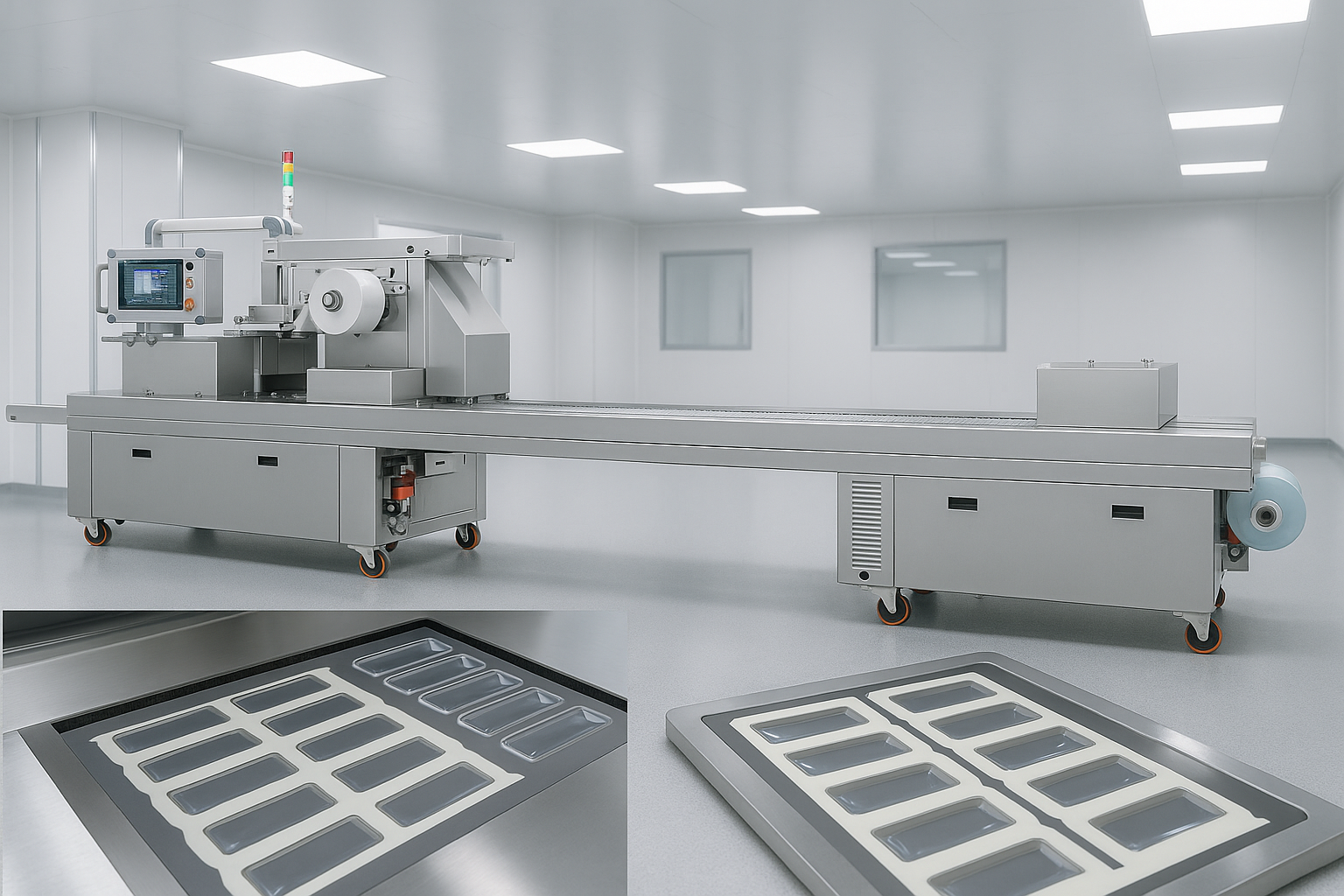
Automatic loading, sealing, and labeling of suture packages.
Supports aluminum foil pouch packaging and blister tray sealing.
High-precision robotic arm for placement of suture packets.
Integrated HMI touchscreen control and sensor-based inspection systems.
GMP-compliant stainless-steel frame with cleanroom compatibility.
Customizable to accommodate various suture sizes and types.

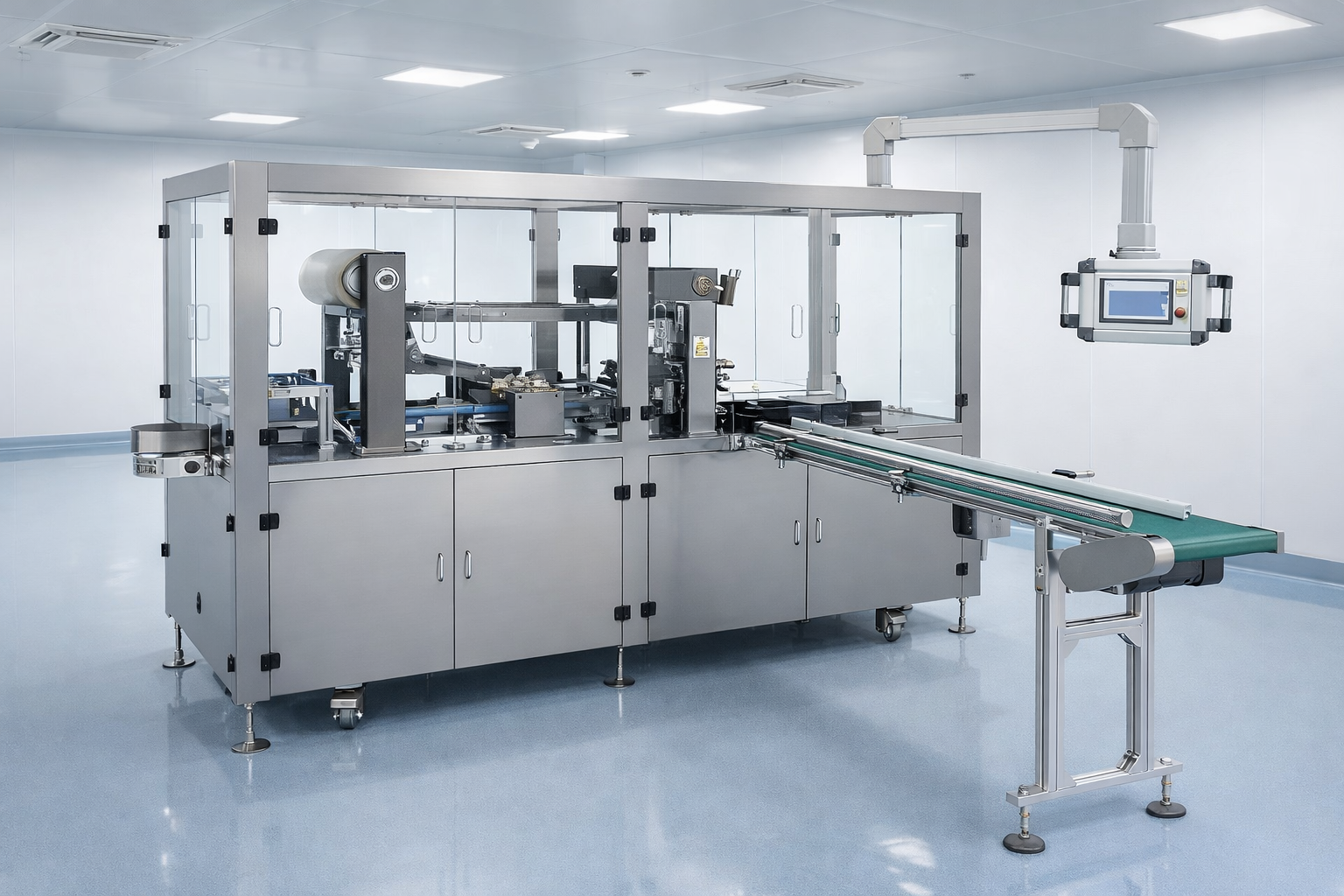
Tridimensional Overwrapping Machine delivers pharmaceutical-grade secondary packaging tailored for surgical suture production, combining precision automation with high-end product presentation. Powered by advanced Siemens PLC control and servo-driven systems, it ensures consistent, airtight, and tamper-evident wrapping that protects sterility and supports regulatory compliance. Its ability to produce moisture-resistant, sealed outer packaging not only safeguards the product but also significantly enhances visual quality and perceived value—critical for success in global healthcare markets and competitive tenders.
Integrated into the final stage of a suture manufacturing line, this system enables efficient, high-volume packaging (15–40 packs per minute) while reducing manual handling and operational errors. It supports anti-counterfeiting measures, seamless batch automation, and compatibility with coding systems for UDI, lot tracking, and expiration labeling. With flexibility across various box sizes, it is not limited to sutures but also suitable for wound care products, catheters, and small medical devices—positioning HEDONE USA LLC as a comprehensive, end-to-end solution provider from production and sterilization to final packaging.
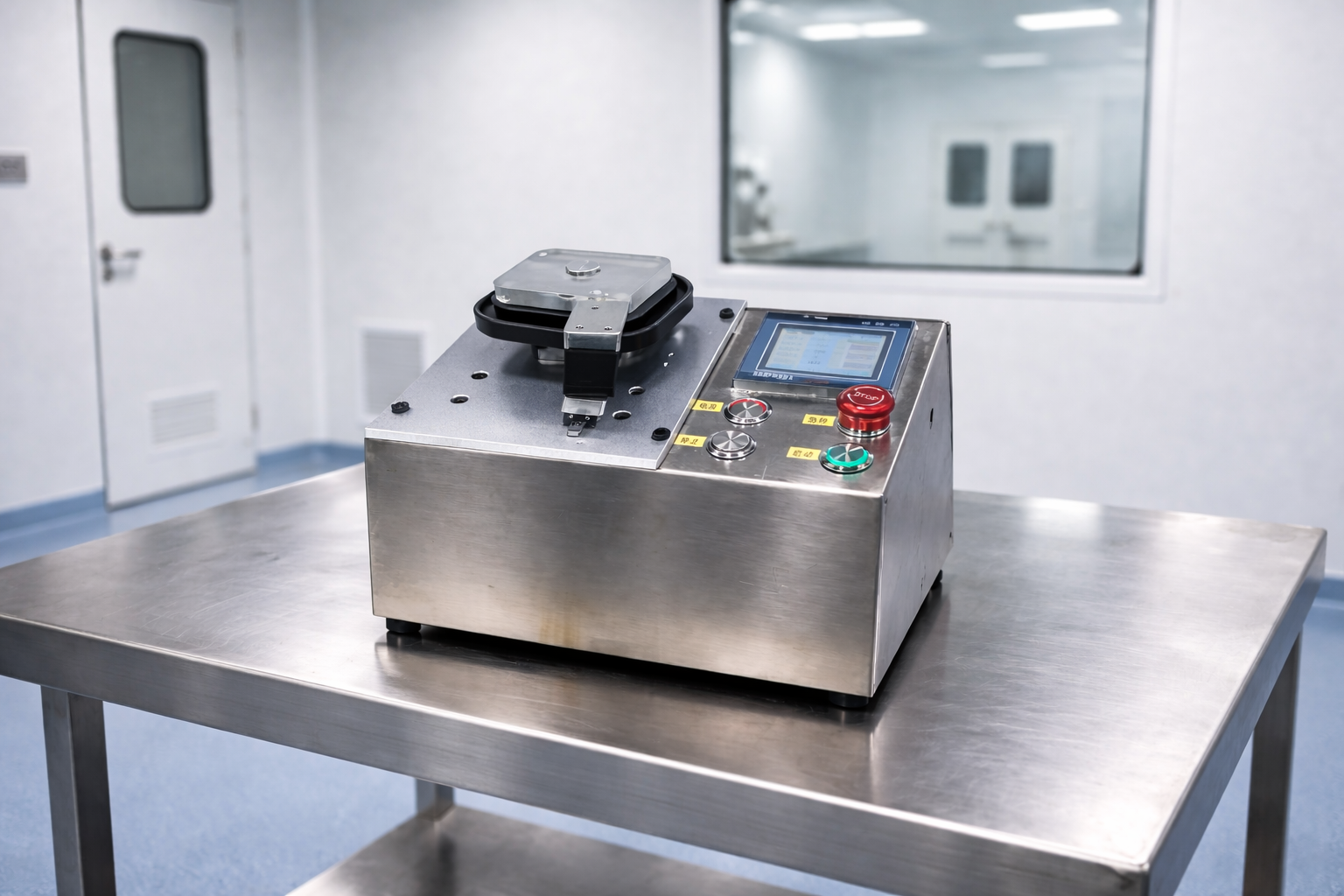
Racetrack Winding Machine for Surgical Sutures is engineered to deliver precision-controlled suture organization at the critical pre-packaging stage, transforming loose filament into perfectly structured, surgery-ready formats. Designed for multi-strand and single-strand applications, this system integrates intelligent control architecture with high-speed winding capability, ensuring consistent loop geometry, optimal tension control, and repeatable product quality. By automating the full sequence—from needle positioning to racetrack loading and winding—the machine eliminates variability associated with manual handling, enabling manufacturers to achieve scalable, high-efficiency production aligned with global medical device standards.
Racetrack-based winding provides a decisive advantage in surgical performance and product integrity. The racetrack design preserves suture memory, prevents tangling, and enables smooth, one-directional dispensing during surgical procedures—directly improving clinician usability and patient safety. It also enhances packaging stability, protecting needle-suture alignment during sterilization, transport, and storage. Combined with compatibility across various suture sizes, needle types, and lengths, this solution supports flexible manufacturing while elevating the final product to a premium, hospital-grade standard. For manufacturers, this translates into reduced waste, improved consistency, stronger brand positioning, and a fully optimized pathway from production to sterile, market-ready packaging.
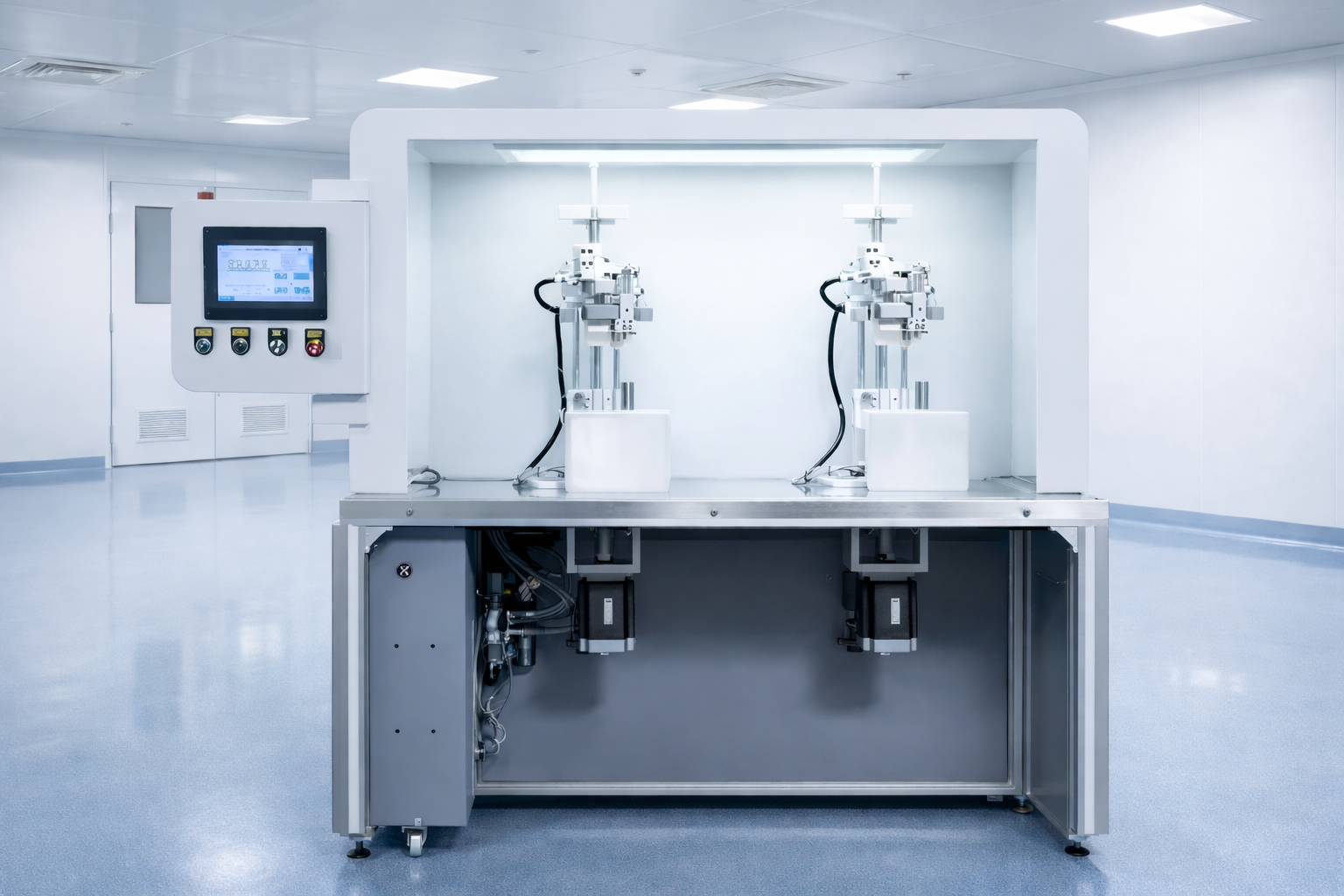
Fully Automatic Racetrack Winding Machine for Surgical Sutures represents the highest level of precision and automation in suture organization, engineered for modern, high-throughput manufacturing environments. This advanced system seamlessly integrates needle positioning, intelligent tension control, racetrack loading, and multi-axis winding into a single synchronized process—delivering perfectly formed, repeatable suture configurations with minimal human intervention. Designed for multi-strand and single-strand applications, the machine ensures uniform loop geometry, stable winding patterns, and consistent product quality, enabling manufacturers to scale production efficiently while meeting stringent global medical device standards.
By utilizing racetrack-based winding, the system delivers critical advantages in both product performance and downstream processing. The racetrack format preserves suture memory, eliminates tangling, and ensures smooth, controlled dispensing in surgical use—directly enhancing clinician experience and procedural safety. In addition, it stabilizes needle positioning and suture alignment during sterilization, transport, and storage, significantly reducing product deformation and waste. With its capability to handle various suture sizes, needle types, and lengths, this fully automated solution provides unmatched flexibility, operational efficiency, and premium product output—positioning manufacturers to achieve superior quality, stronger brand value, and a fully optimized path from production to sterile, market-ready packaging.
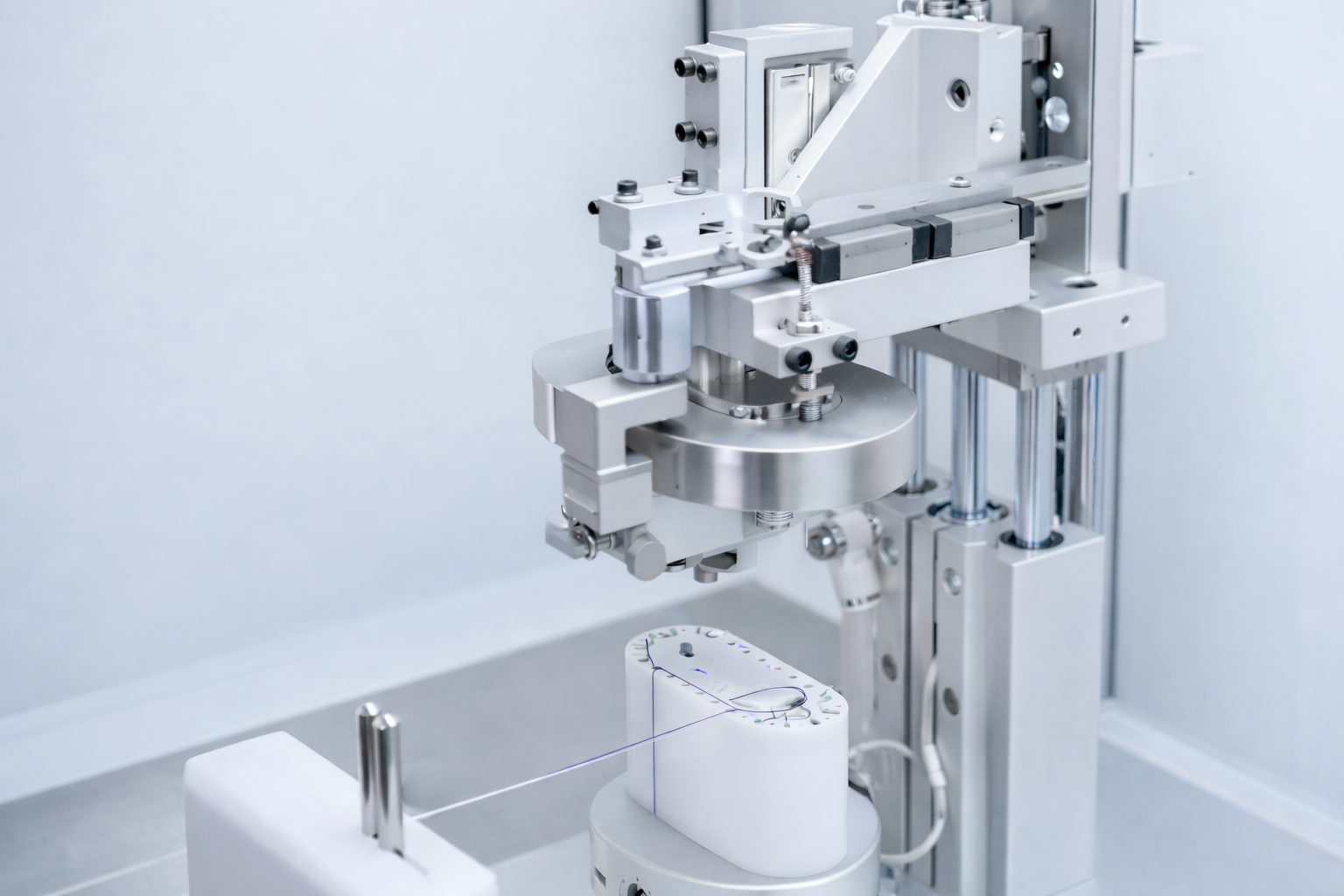
HEDONE USA LLC offers high-quality racetrack plastic trays in oval, square, and round configurations, engineered to meet the demanding requirements of modern surgical suture packaging. Manufactured from medical-grade polymers, these trays ensure precise suture organization, preserve optimal memory, and prevent tangling—enabling smooth, controlled dispensing during surgical procedures. The oval (racetrack) design is ideal for longer sutures requiring continuous, low-friction release, while square and round formats provide compact, versatile solutions tailored to different suture lengths and packaging preferences. Designed for stability throughout sterilization, transport, and storage, these trays protect needle alignment and suture integrity, delivering consistent performance, reduced waste, and a premium, hospital-grade presentation.
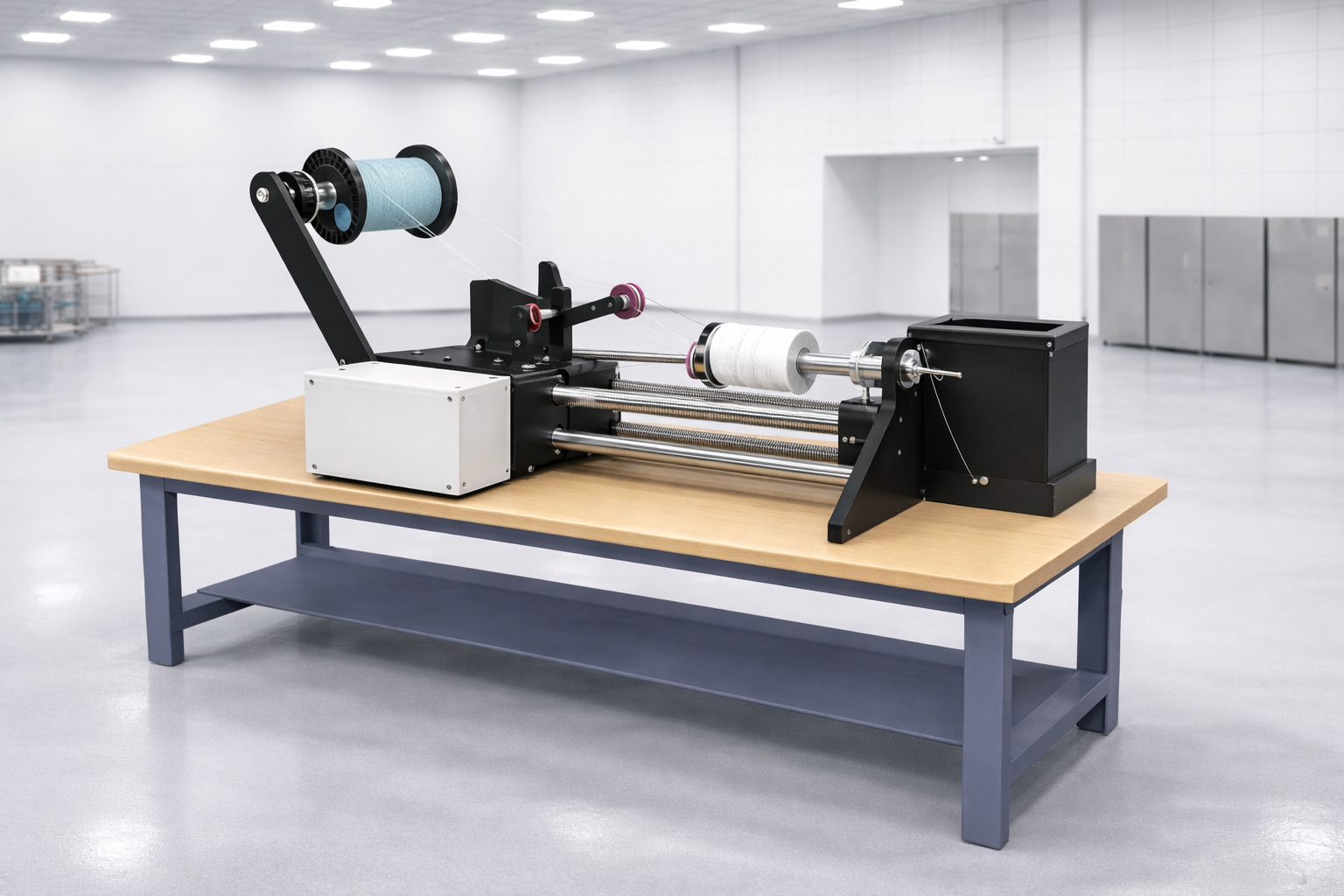
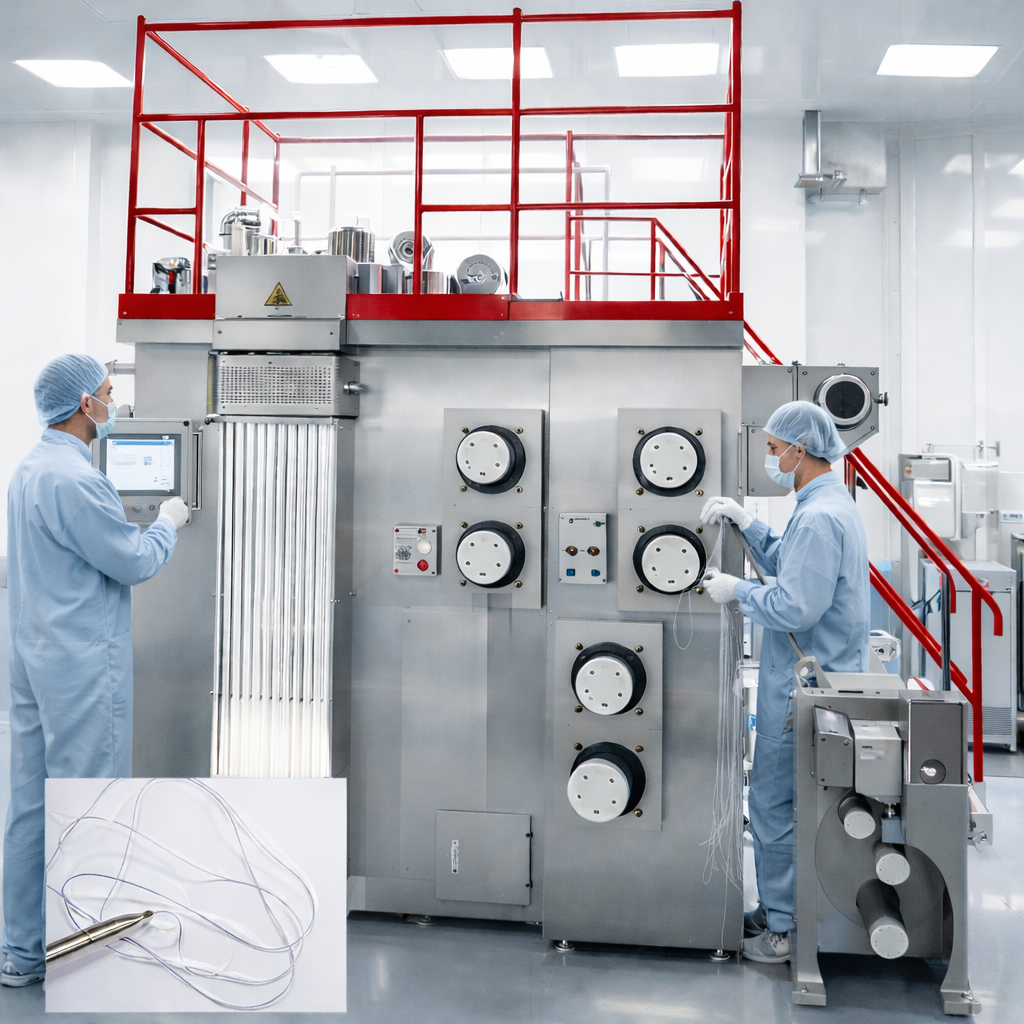
Surgical suture production involves transforming medical-grade polymer or natural fibers into sterile, high-precision threads used to close wounds and surgical incisions. The process typically includes extrusion or braiding, twisting, winding, stiffening, cutting, needle attachment, coating, packaging, and sterilization under strict cleanroom and quality control standards.
Multifilament Winding and Stiffening Machines are used for braided sutures, where multiple fine filaments are braided together and then precisely wound under controlled tension before being treated with stiffening or coating agents to improve handling and knot security. Monofilament Winding Machines handle single-strand sutures such as polypropylene or nylon, requiring extremely smooth tension control to prevent deformation and maintain diameter consistency. These machines use techniques such as precision tension rollers, programmable winding patterns, heat-assisted stabilization, and coating or stiffening application to ensure uniform winding and optimal surgical performance. Both systems are typically integrated into cleanroom manufacturing lines and operate with servo-controlled motors, synchronized spindles, and automated spool handling to maintain strict medical device production standards.
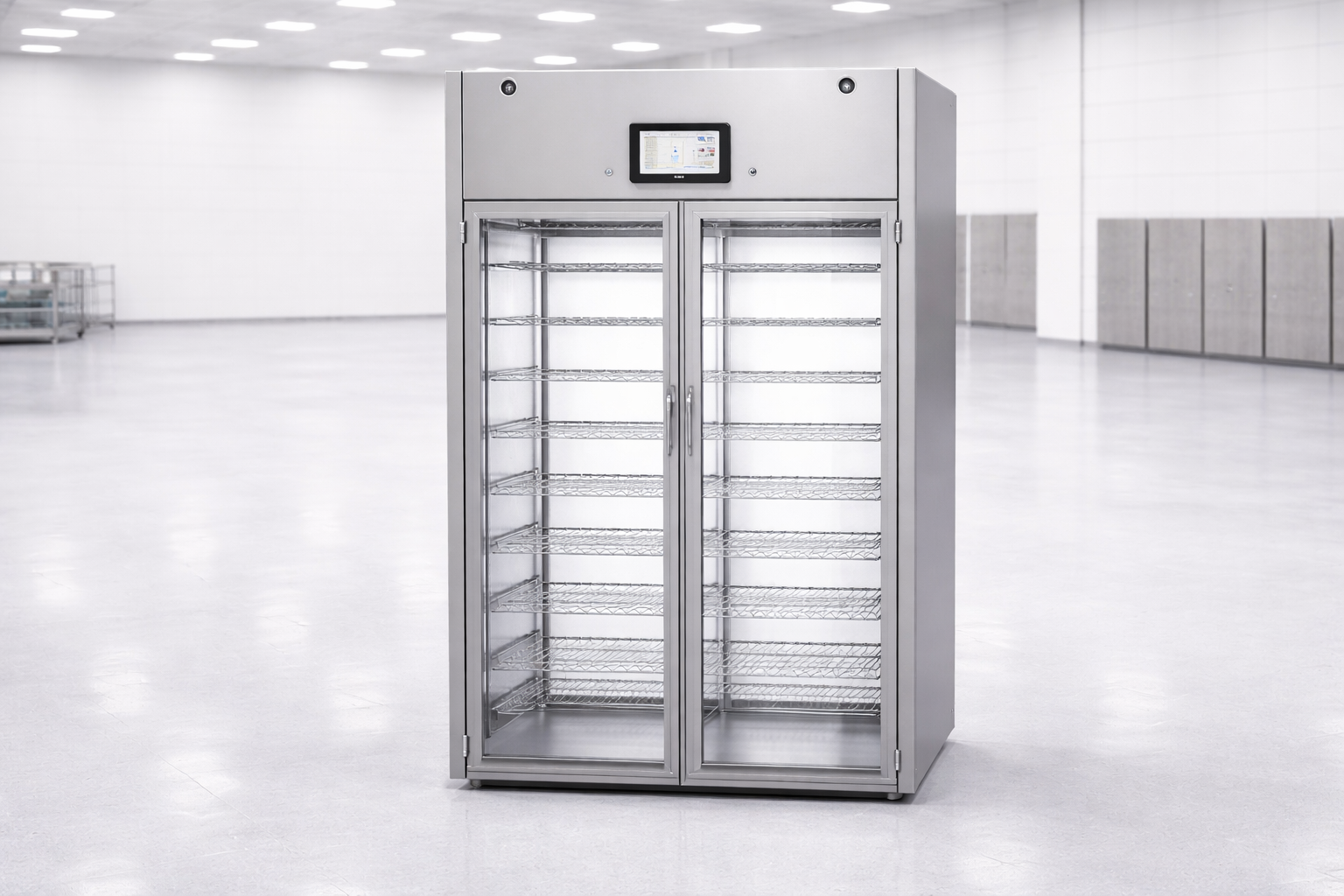
Dry cabinets play an important role in surgical suture production by providing controlled temperature and humidity conditions required for drying, conditioning, and stabilizing suture materials after coating, cleaning, or processing steps. Proper drying ensures that moisture levels, coating integrity, and mechanical properties of the sutures remain consistent before the next manufacturing stage.
In suture manufacturing lines, Dry Cabinets are used to remove residual moisture from both multifilament braided sutures and monofilament threads after processes such as washing, coating, or stiffening. These cabinets operate with precise temperature control, filtered airflow circulation, and uniform drying distribution to prevent deformation, contamination, or uneven material properties. Modern systems often include programmable drying cycles, stainless steel trays or racks, HEPA-filtered air circulation, and digital monitoring to ensure compliance with medical device manufacturing standards. Dry cabinets are typically integrated into cleanroom environments to maintain sterility and product quality before packaging, needle attachment, or sterilization stages.
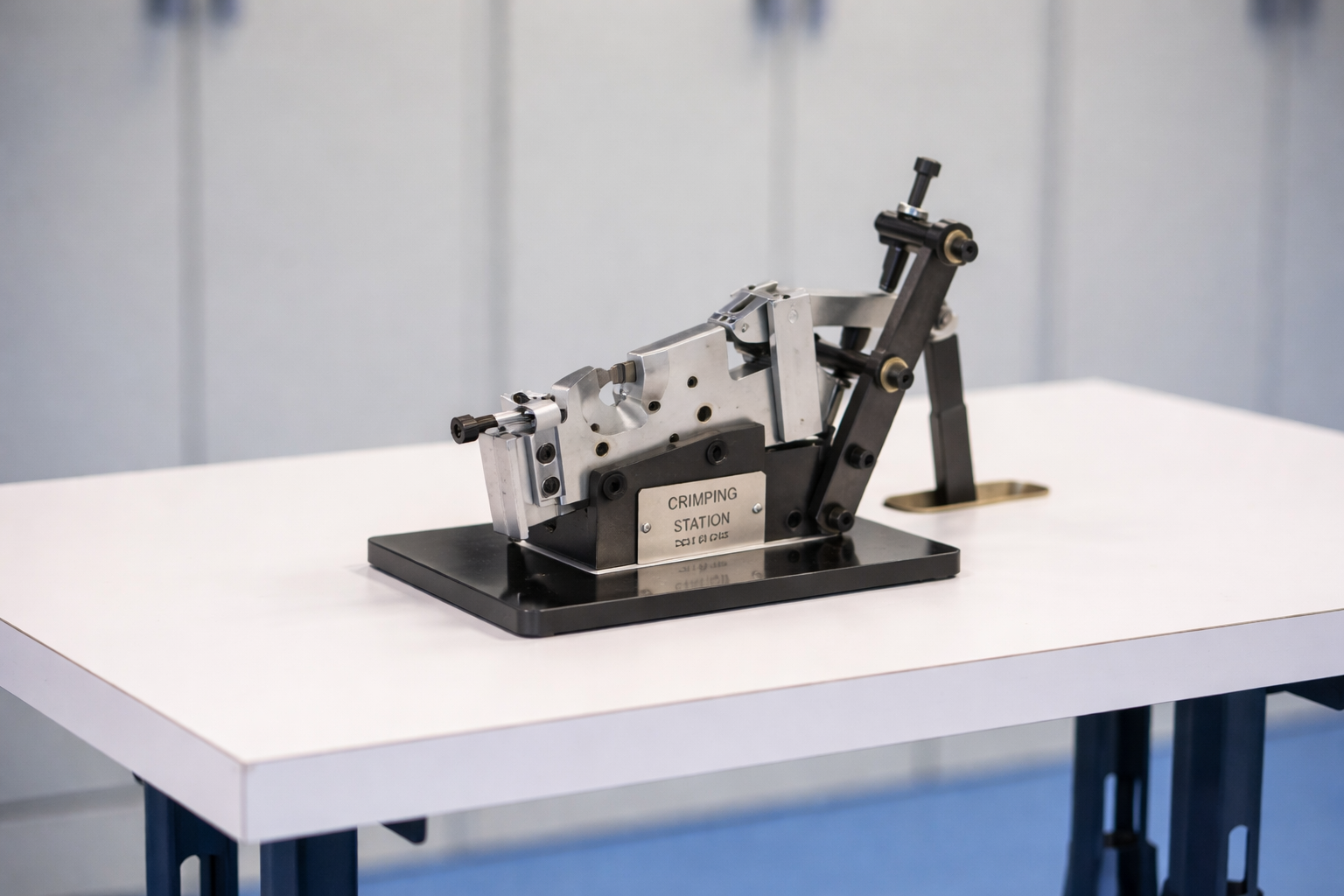
In surgical suture production, crimping machines are used to securely attach the surgical needle to the suture thread, forming a strong and reliable needle–suture connection required for safe clinical use. This process, commonly known as swaging or crimping, ensures that the needle remains firmly fixed to the thread while maintaining optimal flexibility and tensile strength during surgical procedures.
Surgical Suture Crimping Machines are designed to precisely compress the needle channel around the suture using controlled mechanical force and highly accurate alignment systems. These machines can be manual, semi-automatic, or fully automatic, depending on production capacity and precision requirements. Common types include bench-top manual crimping machines, precision micro-crimping stations, pneumatic crimping systems, servo-controlled automatic needle-swaging machines, and high-speed multi-station automated crimping lines used in large-scale suture manufacturing. Advanced systems incorporate micrometer adjustment mechanisms, force-controlled crimping heads, interchangeable dies for different needle sizes, and optical alignment systems to ensure consistent attachment quality. All crimping operations are typically performed in controlled cleanroom environments to maintain medical device manufacturing standards and prevent contamination before packaging and sterilization.
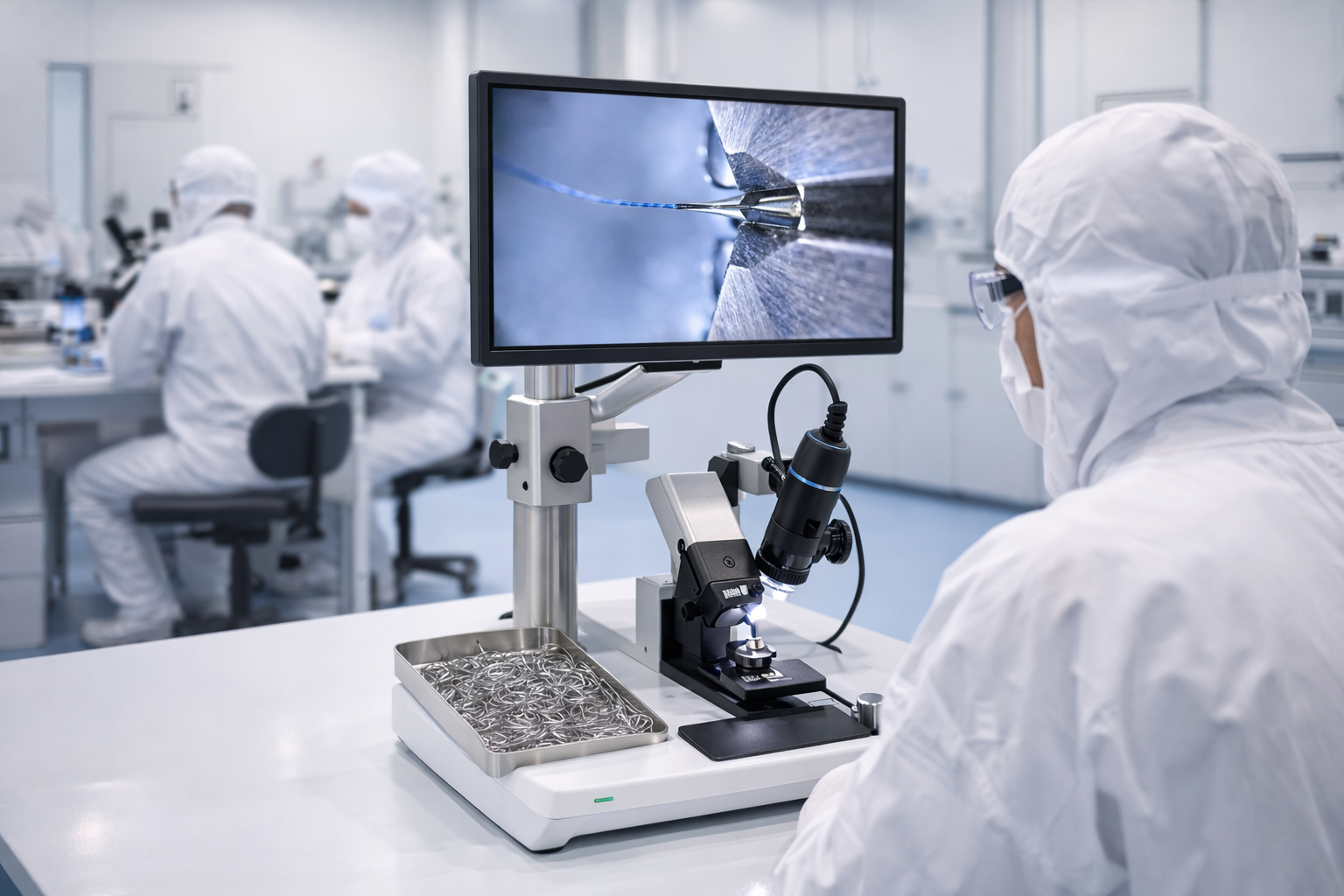
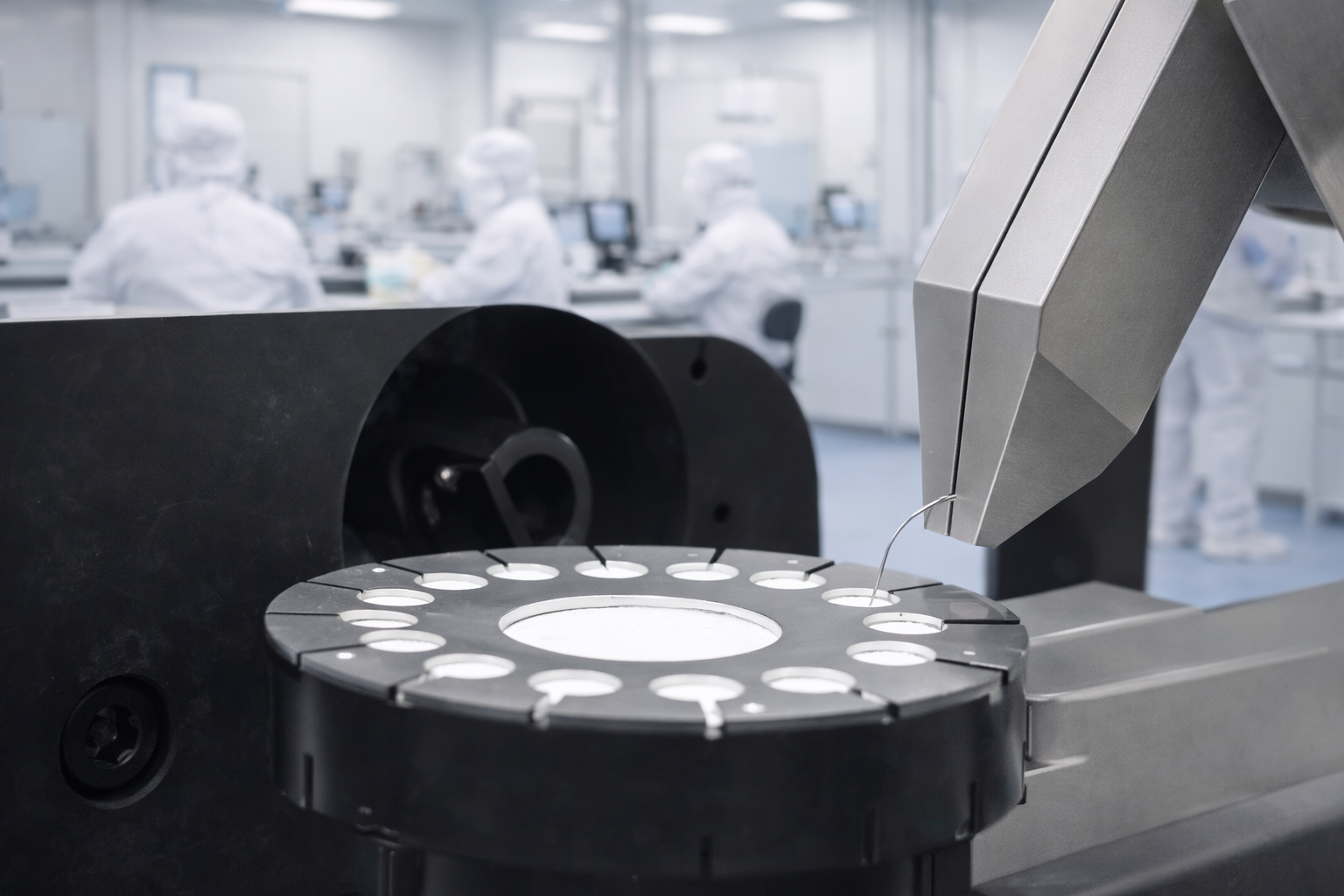
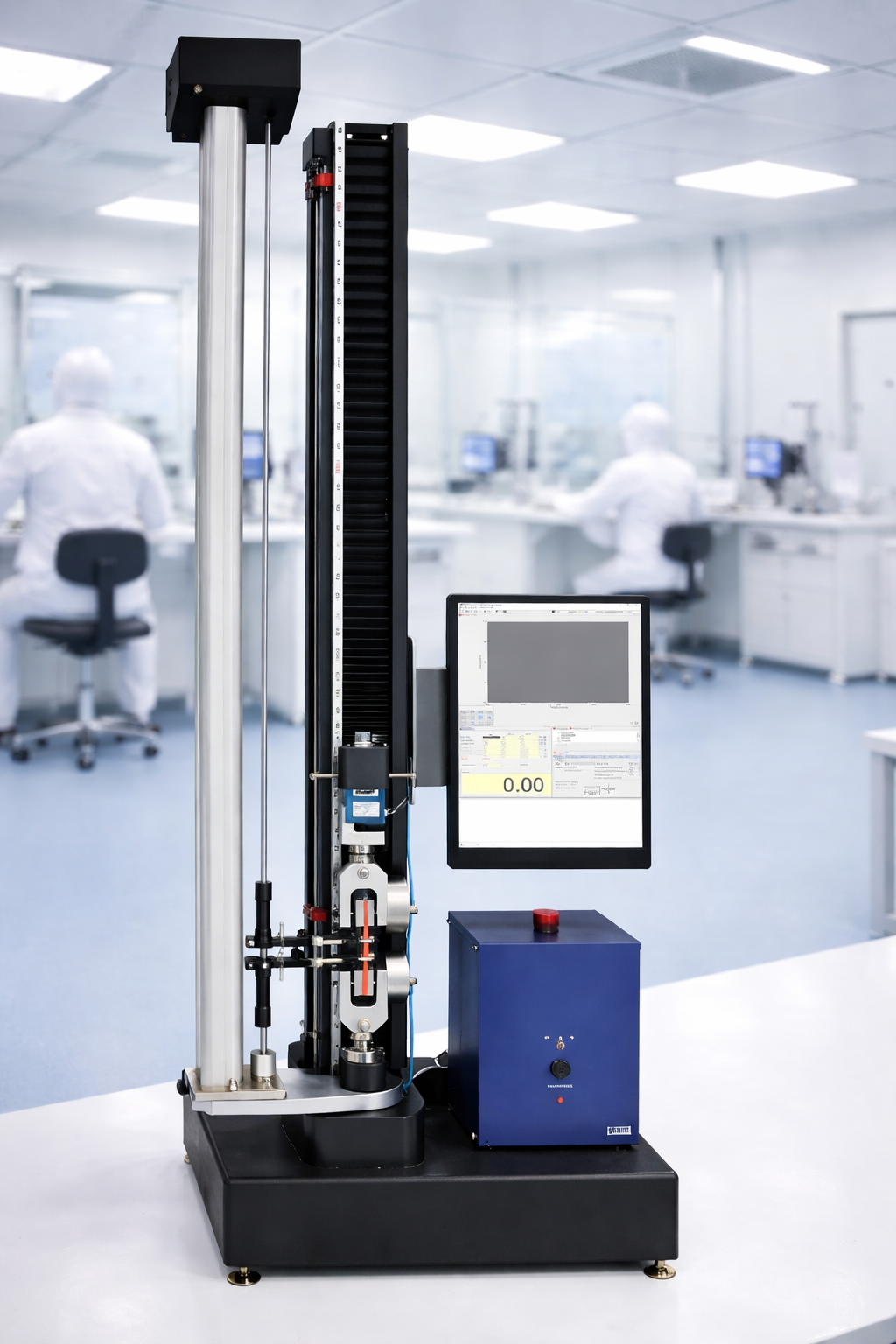
In surgical suture manufacturing, needle penetration testing machines are used to evaluate the sharpness and penetration force of surgical needles to ensure consistent performance during medical procedures. This test measures the force required for a needle to penetrate a standardized testing membrane or material, verifying that the needle meets strict surgical quality and safety standards.
Needle Penetration Test Machines are precision testing systems designed to analyze the penetration characteristics of surgical needles under controlled conditions. These machines use high-accuracy load cells, motorized vertical testing actuators, and calibrated test membranes to measure penetration force, smoothness, and needle sharpness. Advanced systems include rotary multi-sample testing stages, digital force measurement sensors, automated data acquisition, and computer-based analysis software to perform repeatable and standardized tests. The machines are capable of testing ophthalmic, microsurgical, and standard surgical needles used with monofilament and multifilament sutures. Needle penetration testing equipment is typically installed in quality control laboratories or cleanroom environments within surgical suture manufacturing facilities to ensure compliance with international medical device standards.
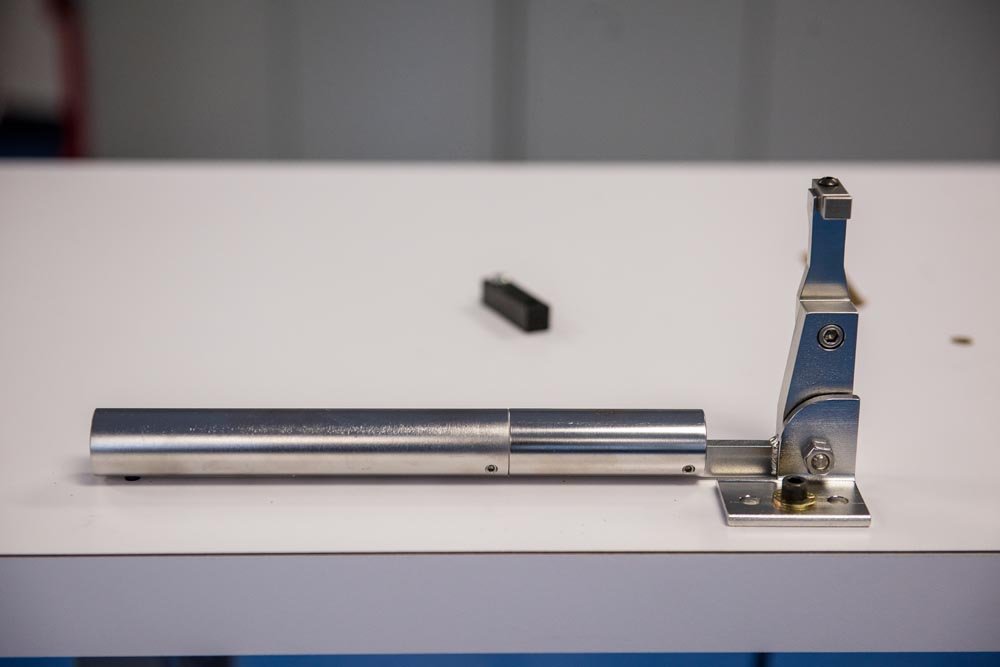
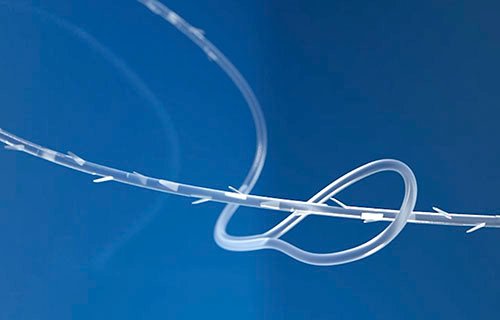
In surgical suture manufacturing, barbed suture winding sets are used to precisely wind and organize barbed sutures onto spools or holders without damaging the delicate barbed structure along the thread. Because barbed sutures contain microscopic directional barbs designed to anchor tissue without knots, the winding process must maintain uniform tension, correct alignment, and careful handling to prevent deformation or damage to the barbs.
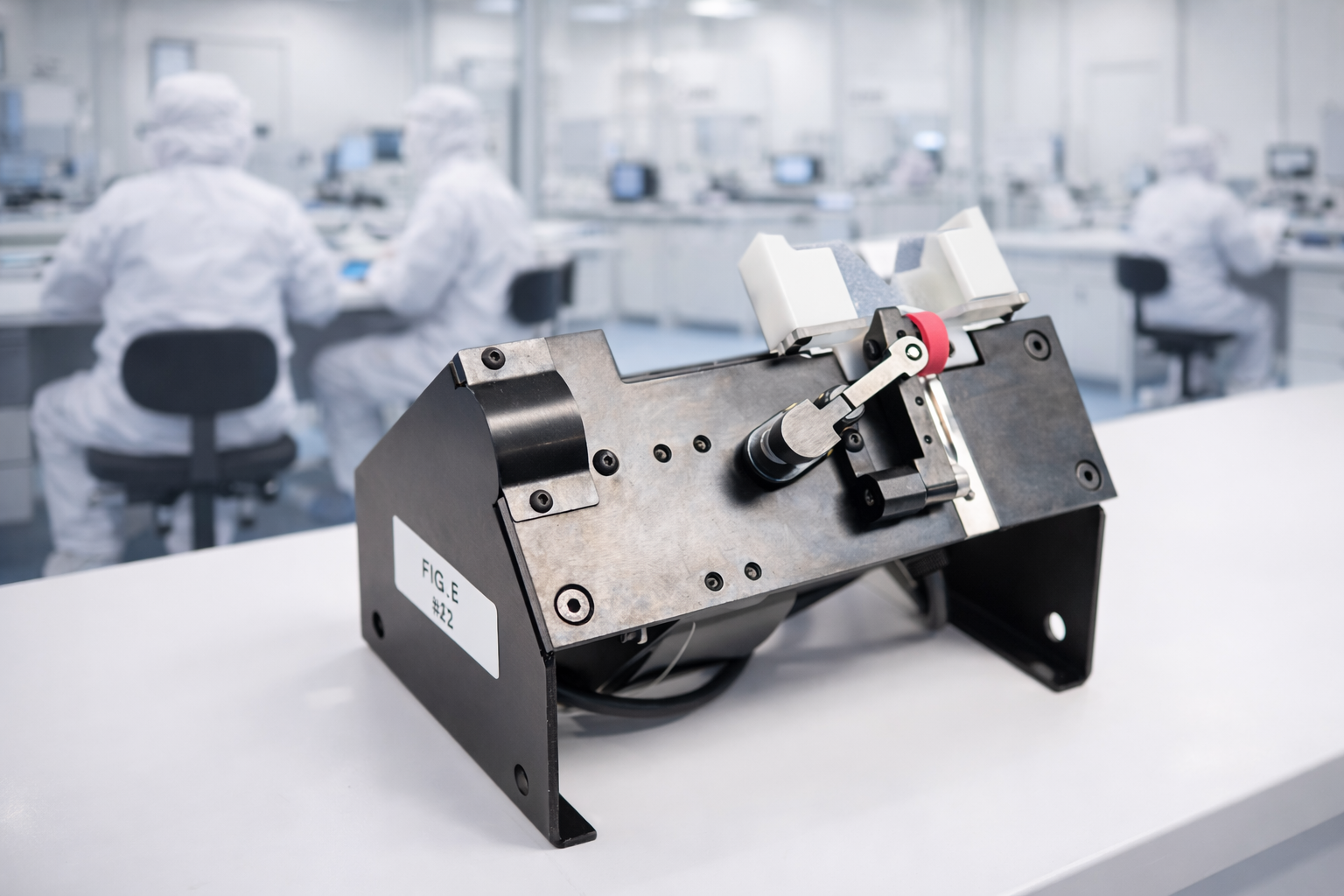
In surgical suture manufacturing, suture card manual winding sets are used to carefully wind sutures onto packaging cards in controlled patterns that allow easy handling, sterile presentation, and smooth dispensing during surgical procedures. Proper winding is essential to prevent tangling, twisting, or damage to the suture material before final packaging and sterilization.
Suture Card Manual Winding Sets are precision winding tools designed to place sutures onto packaging cards using defined winding patterns such as figure-8 winding, oval winding, circular winding, zig-zag winding, and multi-loop winding configurations depending on the suture type and packaging format. These systems typically include adjustable guiding pins, tension control rollers, card positioning fixtures, and thread guiding arms to maintain uniform tension and consistent winding patterns. Manual winding sets are widely used for monofilament, multifilament, and barbed sutures, particularly in small-batch production, specialty sutures, or development environments. Advanced versions may incorporate semi-automatic rotation mechanisms, ergonomic winding handles, and interchangeable winding templates to support different suture lengths and packaging card designs. These winding systems are typically operated within cleanroom production environments to maintain strict medical device manufacturing standards before the sutures proceed to final packaging and sterilization stages.
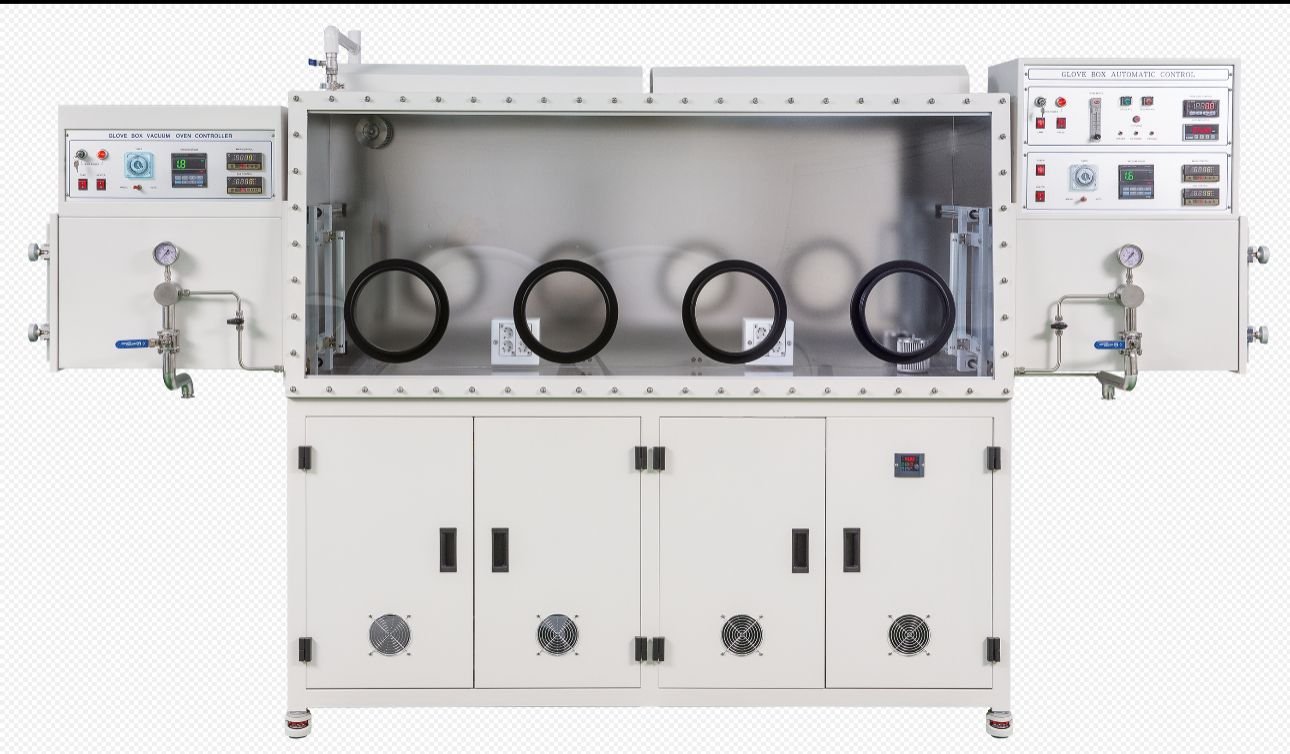
In surgical suture manufacturing, gloveboxes are used to perform sensitive production or handling operations in a controlled and isolated environment, preventing contamination from external particles, humidity, or microorganisms. They allow operators to manipulate delicate suture materials and components while maintaining strict sterile or controlled atmospheric conditions.
Gloveboxes for Surgical Suture Production are sealed workstation enclosures equipped with integrated gloves that allow operators to handle materials without direct exposure to the external environment. These systems are commonly used for precision operations such as needle–suture assembly, micro-crimping, coating application, barbed suture handling, or sterile component preparation. Gloveboxes typically include HEPA or ULPA filtered airflow, controlled humidity and pressure environments, stainless steel interiors, transparent viewing panels, and integrated transfer chambers to safely introduce materials into the controlled workspace. Advanced configurations may also incorporate laminar airflow systems, inert gas environments, and contamination monitoring sensors to meet strict medical device manufacturing requirements. Gloveboxes are widely installed in ISO-classified cleanrooms within surgical suture production facilities to ensure product integrity and compliance with international medical manufacturing standards.